Showing posts with label FMIG Events. Show all posts

Friday, October 29, 2010

National Primary Care Week at BUSM

All at BUSM are invited to attend National Primary Care Week events November 1st - November 5th.

FREE FOOD WILL BE PROVIDED AT ALL EVENTS

The events include:

Monday November 1st: 11:30-12:30 *L109
"The Economics of Primary Care" A lunch talk with Dr. Wiecha and Dr. Kelly
* PLEASE RSVP to this event as space is limited (http://tiny.cc/4378w)

Tuesday November 2nd 5:00-7:00 pm
Primary Care Mixer - bring your questions for a casual, candid conversations and networking with primary care physicians. The physicians attending are from a variety of different primary care specialties and various years in practice.
* This Event is at JJFoley's 117 East Berkeley Street Boston, MA 02118
* A group will be leaving at 4:45 from the medical school lobby

Wednesday November 3rd 11:30-12:30 *L206/209
Pediatrics Residency lunch Talk and Panel

Thursday November 4th 6:00-7:30 *Heibert
"Primary Care Pathways" Come listen and ask questions to a panel of Family Medicine, Internal Medicine, Pediatric, and OB/GYN primary care physicians. The panel will discuss what drew them to primary care in general and to their field in particular, and about what their current practice is like (patient population, types of work, lifestyle, advantages/disadvantages).

Friday November 5th 11:30-12:30 *L109
"How Health Reform will Affect Primary Care" Hear from Dr. Alan Sager as he discusses the recent health reform law and how it will change the face of primary care health care.

Please RSVP to the above events at http://tiny.cc/4378w
Please also complete the following survey to assist our groups in funding these events: http://www.surveymonkey.com/s/3F69QQR

We look forward to seeing you next week!

AMSA, FMIG, IMIG, and PEDS

Monday, August 16, 2010

"What is Family Medicine?"

Good question. Come out to FMIG's next event September 14th to find out!

We'll have our speakers and panelists address this and other important issues such as:
-"what is this FMIG you speak of?"
-"how do CCHERS, FaMeS, and Family Med Scholars differ?"
-"can I get some free pizza for lunch?" (yes!)

When: Tuesday September 14th, 11 am - 12 pm
Where: R-115
What: presentation/panel discusssion/Q+A/lunch

Wednesday, June 16, 2010

Family Medicine Residency Panel + Dinner


Our first event was a great success - thank you to all the hungry first-years who came to get in on our exceptional thai food, and of course, to ask all the important questions of our family medicine panelists.

Our panelists graciously explained how family medicine differs from other specialties (such as internal medicine), what kinds of experiences prepared them for a career in the field, relevant financial considerations and why they ultimately chose family medicine. Thank you to:

Dr. Tom Hines, Residency Director at BMC Family Medicine Residency
Dr. Caitlin Day, PGY3 at BMC Family Medicine Residency
Dr. Anthony Lim, BUSM '10 and resident at
Santa Rosa Family Medicine Residency
Dr. Angelica Salazar, BUSM '10 and resident at
UCSF-Natividad/Monterey Bay


Thursday, October 8, 2009

Upcoming Events!

The semester is well underway now, as you can probably guess by the recent dearth of blog posts. FMIG is still alive and kicking though! Don't pronounce us just yet.


We have super exciting events lined up for the next few weeks, especially as we partner with other student organizations to host National Primary Care Week together. This year's theme is:

Primary Care is Everybody Care:
The Future of Medicine is Now
October 19-23, 2009

To kick off NPCW, we will have a talk in Hiebert at 6pm on Friday, October 16, with none other than Dr. Ted Epperly, President of the American Academy of Family Physicians!

Dr. Epperly will begin the evening as the keynote speaker. He will be addressing the key role of family medicine and primary care in serving the future of health care in America, with a focus on minority health issues. He will also be discussing current health care reform efforts.

His keynote will be followed by dinner, small group discussions on advocacy, and networking opportunities. We hope everyone will be able to make this talk-- it is certainly not often that BUSM gets a visit from the president of a national professional academy, and even rarer to have that guest be so well-versed in and intimately connected to the current healthcare reform debate with a powerful voice for primary care and for family medicine.

Monday, August 24, 2009

Sports Medicine Workshop: On Field Emergencies


Hope you had a good weekend! You are invited to our first Sports Medicine Workshop of the year -- limited to the first 20 RSVPs. Look out for the sign up email in your inbox soon.
  • Who: Everyone!
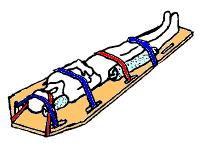
  • What: What is Sports Medicine? Introduction to On Field Emergencies! Dr. Alysia Green will be discussing the field of Sports Medicine. She will also be teaching us how to handle on field emergencies and how to spine board an athlete/patient!
  • When: Thursday (8/27) 5:30pm (will end no later than 7:30pm)
  • Where: L-301
  • Why: Learn about sports medicine, practice spine boarding on each other, meet first and second years, and eat snacks!
We will be having plenty more workshops in the future! Check out the Events Calendar at the top of our blog.

Thursday, August 20, 2009

Contact Info from the Lunch Panel


Thanks so much for coming to FMIG's "What is Family Medicine Panel?" this past Tuesday! We had a great turnout and were really happy to see a mix of both years. To those of you who weren't able to make it but wanted to, please keep your eyes open for upcoming FMIG events.

Also, we received some great questions about Family Medicine from your feedback evaluations. We will write a whole separate post to answer as many as we can, so keep visiting the blog!

Here are the email addresses of our panelists from Tuesday who all agreed that they would be happy to respond to questions you might have:

Finally, for those of you who approached Dr. Markuns after the panel and were interested in possible international health opportunities, he has kindly provided the following contact:

LeBoHA program
Libby Cunningham is the Program Coordinator (ecunning@bu.edu)
Dr.Markuns also mentioned that students should feel free to contact him directly with further questions.

Wednesday, August 19, 2009

Sports Medicine Workshop series!

Many of you met Dr. Alysia Green at our panel this past Monday. As you heard, Dr. Green is one of four BUMC family medicine faculty fellowship-trained in sports medicine. This year, she will continue the very successful series of FMIG Sports Medicine Workshops that started last year. Thanks, Dr. Green!

This year's workshops will all take place on Thursday evenings, 5:30-7:30pm. Because the workshops teach hands-on skills, each workshop will be limited the first 20 students to sign up. Emails will be sent out in advance of each workshop with specific RSVP links. For those who like to plan ahead, check out the FMIG Events calendar at the top right corner of this page to see all upcoming Sports Medicine Workshop dates and topics.

*** The first workshop is next THURSDAY 8/27. Dr. Green will introduce Sports Medicine, in the context of Family Medicine, and will teach spine boarding! ***

Donna (MS2, kurowski[at]bu.edu) works closely with Dr. Green to plan these workshops throughout the year. Email her if you have any questions!

Monday, August 17, 2009

What is Family Medicine? Lunch Panel TOMORROW!

Come to our first event of the year!
  • Who: Everyone
  • What: What is Family Medicine? Hear from family physicians and a 4th year student applying to family med residencies.
  • When: Tuesday (8/18) 11:30am-12:30pm
  • Where: L-110
  • Why: Learn about the full scope of practice in family medicine, meet first and second years, and eat free PIZZA! (Hint: always better to come early when there's free food...)
Check back here next week for a recap and some photos of the event...

Monday, May 4, 2009

Lunch with 4th years

Today, almost 40 first and second years had lunch with 4 fourth years who matched in primary care residency programs to discuss clerkship and residency questions before they graduate in just a few weeks. If you were unable to attend, here's a summary of our discussion with Caitlin, Derek, John, and Robin, all of whom were candid in sharing their memories, experiences, and advice.

How did you decide to go into primary care; when did you make that decision?
With experiences before coming to BUSM like being in the Peace Corps and volunteering in urban shelters, most of the students knew from the beginning that they wanted to be in primary care. The family medicine clerkship at BU was also a great experience. One of the 4th years initially wanted to do surgery, until he finished the surgery clerkship and realized that it was not for him-- all that getting-up-early and standing-all-day business. He's now going into pediatrics with an interest in neonatology.

International away rotations: how many, and which clerkships can count?
In 4th year, you can do up to 3 away electives. Loophole: there are "inside away" electives, which are programs that are not here at BU, but that are credited and count as though you did it here. So, you could potentially do up to 4 months away, plus an additional 2 months of vacation/interview time... you could be away from Boston for 6 months! You can do away rotations for any of the clerkships if you find the right programs. One of the 4th years did the ER clerkship in Chile and the Family Medicine clerkship in Lesotho!

Did ICM affect your decision for residency?
Short answer: no. Longer discussion: the students shared that in such a big hospital setting, you will run into residents and attendings in the various clerkships who may look down on primary care. That can be discouraging, but it also brought the students who were interested in primary care closer together with shared experiences.

What do you wish you had known before starting third year; general advice?
In all your clerkships, keep an open mind. You may be surprised by what you enjoy, what you are good at, and what you do not like. In your clerkships, push push push for what you want to do and learn. As the youngest member in a large team setting, it is easier to stay in the background, but if you are proactive in your education, you will have many more opportunities to do and to learn. Arrive 5 minutes early and quickly review the patients who were admitted overnight to be more prepared when you round on the patients! When things are difficult, remember that each clerkship is temporary and short, and you WILL get through it. Don't take mean comments personally if it happens. Know that you are getting excellent clinical training at BU.

Which third year clerkships are better to do at BMC instead of the other sites?
Medicine, surgery, and pediatrics were highly recommended to do at BMC. And the fourth years all advised that the order of your clerkships in 3rd year does not really matter-- except that doing medicine before surgery will be really helpful. One tip was that new residents start in June/July, so you may have less chances to do procedures compared to the end of the year in April/May. Another tip: your sub-internship grades are important, and there are many sub-i choices.

Favorite part of your clinical years in med school?
Sub-I. By that point, you do feel like you know what you are doing, and it's fun. Doing a rotation at an Indian Health Service, a completely different experience. Going abroad for electives.

Lastly, remember to eat something before going into the OR lest you pass out!

New FMIG leaders

As the school year draws to a close, we want to thank the FMIG leaders from this past year for all their hard work Jen Hsia, Leah Schweid, Sebastian Tong, Jessica Gray, and Marcel Tam organized almost 30 FMIG events this year! There were panels, sports medicine workshops, book talks, the National Primary Care week, and much more. We wish them all the best, especially on their upcoming USMLE Step 1 exam!

The new FMIG leaders for the upcoming year are:
  • Caitlin Christie
  • Carly Grovhoug
  • Donna Kurowski
  • Erkeda DeRouen
  • Jessica Chi
  • Lucas Thornblade
  • Neetu Srivastava
We know that we have big shoes to fill, so we're really excited for next year! Contact any one of us if there are any events, talks, ideas you'd like to see FMIG host; we'd love to hear from you!

Monday, November 24, 2008

Upcoming Anti-Tobacco Advocacy Series

Tobacco-related illnesses are the leading cause of death worldwide. Use of tobacco has widespread implications on the health of the individual and those around the individual and cost the health care system billions of dollars each year.

On December 8, Dr. Alan Blum, Family Physician and Director for the Study of Tobacco and Society at the University of Alabama, will be leading...

11:00-12:00 Round-table discussion on (1) history of the AMA and its role in the tobacco epidemic and (2) how to combine a family medicine career with public health advocacy (E-720)

12:00-1:00 Lecture on "Universities and the Tobacco Industry- True Opponents or Silent Partners?" (L-112)

Lunch will be provided at both talks.

These topics are of especial interest at our school since BUSM has received over the past 10 years $3.99 million in research funding from Philip Morris and is the only medical school in Massachusetts that actively receives funding from Philip Morris.

The talks are co-sponsored by the Public Health Forum, AMSA, AMA/MMS and FMIG.

UK Health Care Talk - Dr. Charlton

Dr. Rodger Charlton led a discussion on the UK medical system with focus on the differences in their primary care system. Dr. Charlton is a general practitioner in a small town in central England and the Director of Undergraduate GP Education and Associate Clinical Professor at Warwick Medical School. He was visiting Boston to share his experiences and research in primary care, and end-of-life and palliative care.

The health care system is called the National Health Service (NHS). It is funded by income tax and is provided to all residents of England regardless of ability to pay OR employment. Dr. Charlton shared about his own practice which includes comprehensive care with nursing staff, staff coordinator, triage receptionist, etc. He also shared that he sees significantly more patients a day than the typical US doctor and continues to make home visits on a regular basis.

Primary care doctors in England are reimbursed by the NHS based on the number of patients they have, not the number of procedures and services they provide. They are paid directly by the NHS; this process significantly reduces amounts of paper shuffling. A few years ago, the NHS changed reimbursement policies so that now primary care doctors make MORE money than specialists. This has increased the number of medical students who are entering into primary care significantly.

Does the US need a similar model of reimbursement? The UK has a system where 50% of its doctors are primary care doctors, a much larger proportion than the US. Would working towards changing this proportion in the US improve health outcomes?

Sunday, November 23, 2008

Addiction talk with Dr. Scott Davis

Dr. Scott Davis, BUSM ’91 and current Director of Inpatient Medical Services at Betty Ford Center, spoke to more than eighty students, faculty and staff on Thursday, November 20th at the medical school. Dr. Davis shared his personal experiences with addiction and recovery, reviewed the biology of addiction and the physiological alterations that take place in the brain of an addict, and clarified important concepts in differentiating patients with tolerance, dependence and addiction in clinical practice. After the talk, Dr. Davis gave out signed copies of his memoir, Living Jonathan’s Life: A Doctor’s Descent into Darkness and Addiction to everyone who attended. Feedback from students about the event was very positive – everyone was moved by Dr. Davis’ story and felt they had gained insight into addiction.


The Betty Ford Center has wonderful opportunities for medical students to gain understanding and insight into addictive disease and the recovery process. Zoe Tseng and Jessica Gray, (BUSM II) attended the week long Summer Institute for Medical Students (SIMS) between their first and second year and would be happy to talk to anyone who may be interested in the experience (students in all four years can attend). In the SIMS program students have the opportunity to spend five days experiencing what it is like to be a patient or a family member at the Betty Ford Center. Students spend time in inpatient treatment, residential day treatment, or the family program. Participants in all programs attend lectures addressing the medical needs of addicted patients and the theory and philosophy of treatment at the Betty Ford Center. They also attend a Treatment Planning Update (TPU) meeting to observe the multidisciplinary care process at the Center.
More information about the SIMS program as well as other opportunities at BFC is available at:
http://www.bettyfordcenter.org/training/summerinst/
http://www.bettyfordcenter.org/training/professionals/

Dr Davis can be reached at:
Scott M. Davis, M.D., M.A., FASAM
Email: sdavis@bettyfordcenter.org

Monday, November 17, 2008

A Doctor's Descent into darkness and addiction

Join us on Thursday, November 20th from 12:30-1:30 in L-112 (lunch provided):

A talk from Dr. Scott Davis, BUSM '91 and Director of Inpatient Medical Services at Betty
Ford Center.

Dr. Davis will be speaking about his personal and professional experiences with addiction, as well as the mechanisms of addiction and the road to recovery. He will be giving out a limited number of signed copies of his non-fiction autobiography, Living Jonathan's Life: A Doctor's Descent into Darkness & Addiction.

Due to the limited number of books, please RSVP by going to the link below to let us know that you are coming. The first people to respond will receive a copy of the book at the talk on November 20th. There will be additional books available for purchase at the medical campus bookstore.

Everyone is welcome to attend the lecture.

RSVP here
if you want a book!

Recent news about physicians and addiction:

Boston Globe Article 9 November 2008
"Something, anything to stop the pain"

Tuesday, November 11, 2008

Innovation in Obstetric Care

FMIG and ACOG hosted a panel discussion on November 10 about the role that family practitioners, OB-Gyn physicians, and certified nurse midwives play in the reproductive health care of women. Dr. Michelle O'Brien from family medicine, Dr. Michelle Sia from OB-GYN, and Susanne Kisten, a midwife, discussed the different approaches each of their respective fields brings to women's health and the impact the interaction of these approaches has. They focused on the model at the Boston Medical Center Labor and Delivery ward, which is one of the most innovative and collaborative models nationwide. Family doctors, OB-GYN doctors and midwives work together in making decisions and learn from each others expertise instead of dividing their patients.

Thursday, October 9, 2008

Ayurvedic Medicine Workshop Registration


Ayurveda, Sanskrit for "the science of life," is a form of traditional medicine practiced in India. This workshop is an introduction to Ayurvedic Medicine featuring guest scholar and practitioner, Dr. Hanumanthrao Palep (Founder, Dr. Palep’s Medical Research Foundation). Dr. Palep is the only recognized teacher at Mumbai University in both Modern Medicine and Ayurveda. Workshop activities include:
  • Overview of Ayurvedic Medicine
  • How to determine your Prakriti
  • Training in Tongue/Pulse diagnosis
  • Traditional herbal preparations
  • Panchakarma Treatment
  • Yoga or meditation exercise
  • Cooking Lab: Nutrition for your Prakriti
  • Final Dinner Celebration
October 11th 9:00am to 4:00pm
October 12th 9:00am to 4:00pm
Hiebert Lounge at Boston University School of Medicine

Space is limited to 30 medical students.

$15 registration fee payable to FMIG representatives upon completion of this online registration form and receipt of attendance confirmation.

Workshop sponsored by...
BMC Department of Family Medicine
Family Medicine Interest Groups (BUSM & HMS)
Association of Integrative Medicine (BUSM)

Tuesday, October 7, 2008

The Patient-Centered Medical Home

Did you know that...
  • 44,000-98,000 Americans die from medical errors annually?
  • only 55% of patients receive the recommended care?
  • there is a 17-year lag between the discovery of more effective treatments and implementation into routine patient care?
(Institute of Medicine, Chasm in Quality)
As part of National Primary Care Week, Dr. Charles Williams (BMC Dept. of Family Medicine) spoke - at a lunchtime discussion with Thai food - about how the proposed Patient-Centered Medical Home (PCMH) attempts to make the quality improvements that are lacking in the US health care system. The discussion went through the features of the PCMH model and how they attempt to make improvements. Dr. Williams mentioned Dr. Gordon Moore's "Ideal Medical Practice" and how he borrowed from Toyota's famous "Lean Manufacturing" process to create a medical practice that would reduce the seven types of waste (Muda):
  1. Defects
  2. Overproduction
  3. Conveyance
  4. Waiting
  5. Inventory
  6. Motion
  7. Overprocessing
For example, Dr. Williams said, to reduce the waste of "Motion", Dr. Gordon placed his office as close to the parking lot as possible so that patients would waste as little energy as possible getting from their cars to the bed.

Questions from students included:
  • Is the Patient-Centered Medical Home a physical building?
"It could be," said Dr. Williams. He further explained that the PCMH is more of a model for looking at a medical practice and measuring it's many different properties to make improvements.
  • Would this receive opposition from medical insurance companies?
Dr. Williams mentioned a project in Boston that is trying to show that by implementing the model they can make improvements in both quality and cost. This, in theory, should make it more attractive for insurance companies.
  • Isn't this already being implemented by Community Health Centers?
Yes, in fact there are some local CHCs that are using this, or something similar, to do reviews of their current practices.
References

Monday, October 6, 2008

Crisis in Primary Care: Making Primary Care Sexy?

At this evening's "Crisis in Primary Care" event, we heard from Dr. James Petros (Director, BUSM General Surgery Residency Program) and Dr. John Abramson (Family Doctor & author of "Overdo$ed America") on the challenges facing the health care field as the result of a lack of focus on Primary Care.

Dr. Petros gave an overview of the physician workforce shortages from the perspective of a residency director. He mentioned that although there have been overall increases in residency placements, the number of new Primary Care practitioners graduated every year has actually decreased as more people specialize. He can see the results of this trend in the clinic as more advanced cases are seen than before...cases that should have been screened had the person had access to a primary care provider. "People just don't die on the bed anymore." said Dr. Petros, but surgical patients today are dying because of a paucity of post-operational follow-up.

He mentioned that while data indicate that the lack of recruitment to Primary Care practice is due to perceived differences in lifestyle, compensation, and general support, anecdotally, it may also be due to perspectives within medical institutions of a lack of "sexiness" of primary care practice. Students asked whether this isolationism was being resolved by increased communication and cooperation in the physician community. They also wanted to know what kind of initiatives were being pursued to make Primary Care a more attractive option for students/residents.

Dr. Abramson extended the points made by Dr. Petros. He outlined an argument that today's "evidence-based" medical environment is too-heavily influenced by the pharmaceutical industry. He emphasized that, as stated by the American Law Institute, "the fundamental purpose of a corporation is to maximize profits and return those profits to its shareholders." He showed us a shift in the early 1980's where pharmaceutical companies became the major funders of clinical trials. Because of the now pervasive influence of the pharmaceutical industry, academic medical institutions place much more emphasis on the biomedical solutions (i.e. pharmaceuticals) even though evidence shows that in many cases these are just as much or less efficacious than non-biomedical treatments (i.e. diet and exercise).

In responding to Dr. Petros' remarks on the perceived "unsexiness" of Primary Care, Dr. Abramson said that it is the non-biomedical aspects of the patient-physician relationship that are the "sexy" part of Primary Care. The trust, compassion, and respect that can be shared between a PCP and her patient are the very soul of medicine, and shifting our "folk medicine" to embrace these approaches to health care (in addition to the REAL evidence-based practices) is what makes Primary Care so "sexy."

We want to hear from you!! Add your comments about...
  • What makes Primary Care "sexy" to you?
Related Links:

Tuesday, September 30, 2008

Register for the Primary Care Mixer


Register Here!

When: Friday, Oct. 10th, 2008 from 5:30-8:00pm
Where:
Boston Medical Center, East Newton Pavilion,
2nd floor, Conference Room C & D
Click Here for Maps


Are you...
  • a Medical Student interested in Primary Care?
  • a Resident in a Primary Care specialty?
  • a Faculty member in a Primary Care dept ?
  • an Alumnus practicing Primary Care?

You are invited to join us for the final celebration of a series of events for National Primary Care Week (Oct. 5-11th). This is an event for medical students, residents, faculty and alumni to network for and promote recruitment and retention in Primary Care medical practice. Casual attire recommended. Hors d'oeuvres, including a chocolate fountain, will be served (budgets are tight). Live music provided by generous and talented medical students.

Sunday, September 28, 2008

National Primary Care Week @ BUSM

Mon Oct 6 @ 5:30: "Crisis in Primary Care"
Speaker: Dr. John Abramson, family doctor & author of "Overdo$ed America"
Location: Hiebert
The two speakers will examine the critical shortage of primary care physicians and implications on health policy and patient health. Dr. John Abramson is an award-winning family physician, on the clinical faculty at Harvard Medical School. His publications include "Overdosed America." He will discuss the growing waste and comercialism in American medicine and identify health policy solutions.

Tue Oct 7 @ 12:00 Solutions- Patient-Centered Medical Home

Speaker: Dr. Charles Williams, Family Medicine
Location: R-109
The Patient-Centered Medical Home (PC-MH) is an approach to providing comprehensive primary care established by the American Academy of Family Physicians, American Academy of Pediatrics, American College of Physicians, and American Osteopathic Association.

These groups, representing about 333,000 physicians, created a set of 7 principles for the PC-MH:

1. Each patient is entitled to a personal physician
2. The physician is the leader of a team of individual practitioners
3. Whole person orientation
4. Care is coordinated and/or integrated using the latest and most appropriate technology
5. Quality & safety
6. Enhanced access to physicians
7. Payment schemes that reflect the value of the PC-MH for patients' health.

Register here


Wed Oct 8 @ lunch: Primary Care Tables, Lobby
We will be selling fruits with chocolate fondue. Information sheets will be provided about primary care highlighting statistics, critical issues and ways to get involved. There will also be a membership sign-up for the American Academy of Family Physicians (FREE) for those interested. Membership includes subscription to American Family Physician, a twice-monthly journal, scholarships to conferences, and other discounts and benefits.

Fri Oct 10 @ 12: Global Health and Primary Care

Speaker: Dr. Thea James, Emergency Medicine
Location: L-112
Dr. Thea James is an Assistant Professor of Emergency Medicine at the Boston Medical Center. She graduated with an MD degree from Georgetown University School of Medicine in 1991, and finished her residency in Emergency Medicine right here at the Boston Medical Center. She has gone to Haitian hospitals to provide care with more modern technology, and is also the Co-Director of a BMC based Haitian Health Institute.

Fri Oct 10 @ 5:30: Primary Care Mixer
Location: BMC East Newton Pavilion, 2nd floor, Conference Room C/D
Come meet and talk with primary care residents, faculty, medical students and alumni.
Register here

Tue Oct 14 @ 5:30: Geriatrics Workshop
Hosted by Boston University Chapter of the American Geriatrics Society
Speaker: Dr. Won Lee
Location: L-414
How well will you function when you are 85?

Join Dr. Lee and the BU Chapter of the American Geriatrics Society as they host an Interactive Aging Workshop to explore and experience the aging process. The workshop will be a hands on experience based on Xtreme Aging programs found at other medical schools.


Wed Oct 15 @ 6:00: Medical Activism Panel
Speakers: Dr. Michael Grodin (BUSPH), Dr. Felton Earls (Social Medicine, HMS), Dr. Joia Mukhergee (PIH, HMS), Dr. Jay Bhatt (PGY1 Cambridge Health Alliance, past AMSA president)
Location: Bakst
A multi-generational panel of physicians will reflect on the role activism plays in their medical careers and discuss the important of activism in medicine today.